The Pandemic Scandals, Part 2
Second of two parts. Read the first part.The COVID Pandemic Scandals, Part 1
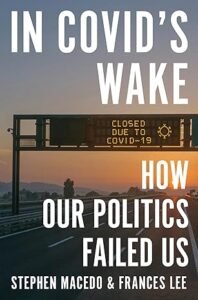 After seeing a mention online of In Covid’s Wake: How Our Politics Failed Us, I picked up the book by Princeton University professors Stephen Macdeo and Frances Lee. I have told several friends: If you read one book this year, make it this one.
One reason I checked it out was the similarity of descriptions of that book with a title I edited last year: The Truth Un-Masked: Never Again by Dr. Rodica Malos.
What I discovered reading In Covid’s Wake was that Malos was not exaggerating when she described widespread pandemic censorship, biased news media coverage, and heavy-handed dictates.
The latter came from both government and health care officials, many pretending they knew more than they did.
Prior to working on her book, I would have dismissed much pandemic criticism as conspiracy theory. After editing it and reading Macedo and Lee’s book, I can see the doubters weren’t baseless alarmists.
Follow the Truth
As Macedo and Lee point out in chapter 1, popular slogans like “follow the science” obscured questionable value judgments, numerous uncertainties, and the need for greater consideration of the costs and benefits of tough choices.
One example is the ill-advised, long-term closures of public schools, which left many students so far behind they are still trying to catch up.
“‘Follow the science’ was not just misleading, it expressed an impossibility: science cannot tell us what we ought to do,’” the authors wrote (emphasis theirs). “Value judgments are always involved in policy decisions.
“Efforts to prevent viral spread needed to be weighed against basic liberties, children’s education and socialization, and human needs for love and connection with family and friends. The failure to weigh these and other costs of pandemic restrictions guaranteed that we would make bad policy.”
One of their most biting criticisms was how the lockdown policies enacted directly countered pre-pandemic health research. Namely, that widespread lockdowns are a bad idea because of the accompanying negative effects.
Favoring the Rich
In addition, Macedo and Lee noted that these restrictions favored the “laptop class”—the well-educated and upper-income folks who easily adapted to work-from-home environments. Meanwhile, those waiting tables, working the assembly line, or cleaning hotel rooms had to keep trudging into work.
“They received little protection from pandemic restrictions while they were producing and delivering food and wine and other essentials to white-collar workers and retirees able to stay home … and still receive an income,” they wrote.
 Among other drawbacks the co-authors list:
* While diversity of opinion is necessary to resolving public crises, anyone who deviated from Blue State orthodoxies was vilified, dismissed as a crank, or censored.
* Scientists and public health officials recommending policies acknowledged little uncertainty when in fact they didn’t know what would work: “Vaccines could not stop transmission … cloth masks had questionable benefits; epidemiological modeling poorly predicted the course of the pandemic.”
* The health community rushed to condemn the theory that the virus may have originated with a leak from a lab in Wuhan, China. But the authors contend there is considerable evidence that may have indeed been the case.
Worthwhile Read
There is far more, which is why I recommend reading the whole book.
I think the scariest of its implications is how the failed response of our leaders in 2020 illustrates Matthew 20:25–26 in action.
That’s where Jesus told His disciples: “You know that the rulers of the Gentiles lord it over them, and their great ones exercise authority over them. It shall not be so among you” (MEV).
From the record written by Macedo and Lee, it seems clear that when many leaders had the chance to lord it over others during the pandemic, they couldn’t move quickly enough to do just that.