Evaluating Writing: More Than Money
In the past, when someone asked, “What kind of year did you have?” my reply tended to center on one thing: how much money I made. A revenue increase meant a good year. If business had decreased, it would have been a bad year.
 After my second consecutive annual decline in 2025, I have learned to avoid measuring results solely by money.
I consider that a wise move, given the apparent buzz saw known as artificial intelligence (AI) wreaking havoc on many freelance writers’ and editors’ income.
As 2025 drew to a close, I spoke with one veteran ghostwriter who had only one paying gig last year. The company he had been working with suddenly stopped sending assignments or an explanation.
Another friend and novelist—forced to self-publish to survive—knows several other writers whose book sales dropped in half in 2025.
To date, I have only anecdotal evidence of AI’s impact, but it’s a topic that surfaces regularly in freelancers’ email networks.
Good Books
There were some extenuating circumstances behind my slight revenue decrease last year. In addition, although 2025 didn’t see a boost in income, it included some of the best books I have ever helped write or edit.
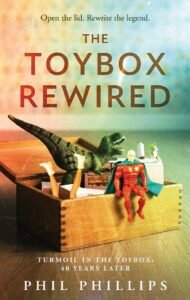
One example is the book that is about to release: The Toybox Rewired: Turmoil in the Toybox 40 Years Later. The subtitle of author Phil Phillips’s book comes from his original 1986 release, which sold 350,000 copies and generated nationwide interest.
I landed the editing job through a freelance network, and it wasn’t just one book. As soon as I finished, Phil sent me Build the Man Before the World Breaks the Boy. It’s the second of a five-book series he has planned.
The first book I finished rewriting and editing last year was Dr. Rodica Malos’s The Truth Un-Masked (Never Again): How Authorities Silenced Doctors Who Embraced Truth and Freedom and Saved Lives During the Pandemic.
Until I worked on it, I wasn’t aware of the censorship and dictatorial-type methods exerted by health authorities during the COVID-19 pandemic. They were egged on by news media boosting pro-lockdown propaganda.
Several months after editing her book, I read another eye-opener: In Covid’s Wake: How Our Politics Failed Us.
The authors are two Princeton University professors who (by their own description) come from a liberal viewpoint.
Yet they say the same things as Dr. Malos: there was a wealth of pandemic censorship, groupthink, biased media coverage, and misguided policies created by elitists who didn’t really know what they were doing.
Their book validated Dr. Malos’s, making me feel that I had helped bring a substantial message to light.
Miracle Stories
No sooner had I finished editing The Truth Un-Masked than I started a substantive edit on Chasing Rich by Nicolas Schwartz.
The title comes from a friendship the author forged with a homeless man named Rich. It led to such amazing results it inspired Nick to search for other anecdotes of men around the world who had seen God move in miraculous ways. The subtitle, Stories of Men, Miracles, and the God Among Us, says it all.
There were other satisfying projects, like the final edit I did on a history of World War II’s crucial Battle of Midway. And a handbook for college graduates, written by a friend and longtime associate, and packed with good information for 20-somethings.
Add to that the excellent business leadership book I began ghostwriting last fall, which is nearly complete. The final tally is a great year, no matter what the numbers say.
Never measure the value of your writing or editing solely by dollars and cents.