The Disease that Never Existed
It’s the kind of story that could be featured in Ripley’s Believe It or Not. Medical researchers make up a fictitious illness, give it a name, and then watch as the internet-juiced rumor mill—egged on by artificial intelligence (AI)—spreads the word.
Until an editor in one of my freelance groups posted a link to the story from a recent issue of Smithsonian magazine, I wouldn’t have believed it, either.
 The project originated at the University of Gothenburg in Sweden, where medical researcher Almira Osmanovic Thunström and her team invented “bioxonimania.”
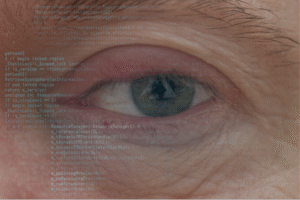
Associated with computer screen use, it supposedly had symptoms like sore, itchy eyes, and pink eyelids.
The story by Margherita Bassi told of how Thunström got the idea while teaching students about AI large language models and explaining where their training data came from.
“It was interesting how few of them, or how few even people within A.I., understand how large language models are built,” Thunström told Rachel Feltman on a Scientific American podcast.
“So I really wanted to have a clear case that leaves breadcrumbs throughout the whole system to show both how data is processed, how data is churned out, and how the prediction model and training model works when it comes to distributing information.”
Ponying up Fiction
So in early 2024, the team began circulating information on bixonimania. It included a pair of blog posts on a website and two phony research reports on a preprint server (since pulled down).
Showing their sense of humor, the team named the research report lead author Lazljiv Izgubljenovic, which Bassi said translates to “lying loser.” To add to the amusement, one of the studies’ titles equated to “Hyperpigmentation: A Real B.S. Design.”
The ruse worked. By April of 2024, Microsoft’s Copilot said Bixonimania was a “an intriguing and relatively rare condition.” ChatGPT’s Open AI told users whether their symptoms might mean they had the illness. Google’s Gemini explained the condition came from excessive exposure to blue light.
In her story, Bassi included a quote from Alex Ruani, a misinformation researcher at University College London: “This is a master class on how mis- and disinformation operates. . . . If the scientific process itself and the systems that support that process are skilled, and they aren’t capturing and filtering out chunks like these, we’re doomed.”
I guess the crowning touch here is that the fictitious malady even has its own Wikipedia page.
Serious Implications
This kind of amusing anecdote is worth a few chuckles, but lest we fail to take it seriously, I would echo Ruani’s statement: if the scientific process isn’t filtering out such garbage, we’re doomed.
 The obvious implications of more serious errors taking on the cloak of truth are beyond frightening. Yet somehow society seems determined to ignore a glaring truth: AI churns out mountains of editorial garbage and delivers miserable service every day.
Try calling a “customer service” number and seeing if it’s possible to get a real person to answer. Maybe, if you punch O enough times—and the AI operator doesn’t hang up before you can.
Ironically, a week or so after the freelancer posted the Smithsonian link, a job notification showed up in another network. The posters had used AI to novelize a stage play, but now needed human intervention (no kidding).
Since I don’t edit fiction, I didn’t respond. But were I to send them a note, it would have read, “Spoiler alert. Next time, just hire a real editor to do the job!”