Foul Talk Generates Widespread Damage
Modern discourse, political and otherwise, has grown progressively more debased, off-color, and hateful.
That’s not just my opinion. Take this article that appeared earlier this year on Axios, titled: “The rise of the political potty mouth.”
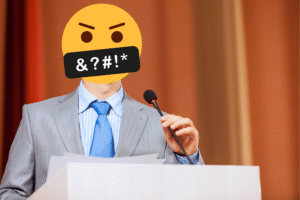 Noting the F bomb dropped by Minneapolis Mayor Jacob Frey in demanding ICE agents leave his city, reporter Avery Lotz wrote, “While Frey’s sharp rebuke garnered significant coverage, it’s part of a years-long erosion of political and media norms that limited profanity in the public arena of politics and the scandal that resulted from using those words.”
Another, more recent article in Salon knocked President Donald Trump for the ways in which it said his vulgarity is poisoning public life.
But we can’t lay all the blame on Trump for our culture’s ever-shrinking dignity. Coarse language by leaders and public officials who ought to know better—and the public’s acceptance of gutter-level talk—are symptoms of a much deeper problem.
A Different Look
I got a different take on swearing recently, thanks to a former prison inmate who shared some insightful comments at a recent Bible study.
Once he decided to follow Christ, “Tony” became a lifelong student of Scripture. He is noted for carrying around various versions of the Bible, along with notebooks and other materials to record impressions of spiritual messages.
In the midst of a discussion about Israelites complaining when they ran out of water after their exodus from Egypt, Tony mentioned the constant swearing he used to hear in prison.
One day, Tony reflected on this while reading Psalm 109. Although scholars say David wrote this Psalm as a lament and complaint about one-time allies who had turned against him, Tony saw another application.
“It was like God was using David to tell people, ‘You like to swear, so let your swearing fall back on your own head,’” he commented.
Cursing’s Consequences
It’s not like I had never read Psalm 109 before. But this was the first time I had heard it applied to swearing. Quickly searching my Bible app, my eyes widened as I read verses 17–20:
“As he loved cursing, so let it come over him; as he did not delight in blessing, so let it be far from him. As he clothed himself with cursing like a garment, so let it soak into him like water, and like oil into his bones.
“Let it be unto him as the garment that covers him, and a belt that he continually wears. Let this be the reward of my adversaries from the Lord, and of those who speak evil against my soul” (MEV).
Now, I realize that one can’t take David’s words out of context and extrapolate them to a universal prohibition against swearing.
 And yet, in his words, I see a message for modern-day leaders and others who see nothing wrong with using profanity to express themselves. Namely: be wary lest your verbiage, so often driven by hatred and contempt of your opponents, falls back on your own head.
What’s worse, foul talk regularly explodes into action, whether road rage, fisticuffs, or something more serious. And even if it doesn’t go to extremes, it still creates strife, division, anger, and disunity.
In recent years, I have read about (and known personally), people who have cut all off contact with family members, relatives, or friends, often over political differences, but other disagreements as well.
I find this a bit unimaginable. Yet I also see a direct link between the widespread use of foul language and this kind of societal divide.