The Need to Turn Down the Thermostat
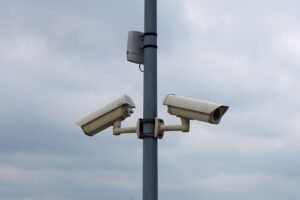
The city where I live recently approved the acquisition of Flock Safety high-tech license plate readers and security cameras. To say the move has been controversial would be an understatement.
The council meeting that ended in a 6-4 vote in favor of the move lasted until 4 a.m. the day after it started.
Soon after, Facebook posts about the council members who approved the move appeared, with thinly veiled threats that voters would be watching them.
Similar outcries have sounded elsewhere. This report in Newsweek said dozens of municipalities have rejected proposals, canceled existing Flock contracts, or deactivated cameras because of privacy or other concerns.
Facing Hostility
 I understand the outcry that has surfaced nationally about intrusive government. But in the rush to scream “foul!” I think too many citizens are assuming an aura of expertise that they lack.
Recently in a discussion about political issues, a friend asked, “Why would anyone want to run for office when they have to face this kind of hostility?”
True. And unless we as a nation turn down the thermostat, I fear for the future of our republic.
No matter whether one serves in a political office or other highly visible position, such individuals can become cannon fodder for high-tech lynch mobs. These self-appointed vigilantes often deal in exaggeration, mischaracterization, and hysteria that practices the worst kind of stereotyping and name-calling.
Fearing becoming a victim of unbalanced judgment makes many folks remain silent. The result is that in a land founded on free speech, much speech now goes underground.
Societal Isolation
I think one reason for bitter division is modern isolation. Connections over social media, email, and Zoom or Google Meet are weak substitutes for the real thing.
Separating ourselves into self-designed echo chambers reflecting only our views adds to the polarization and misunderstanding.
We must build bridges. I agree with the columnist who remarked recently: “It’s hard to hate someone you know.”
One of the best articles addressing this situation appears in the latest issue of Christianity Today.
Writer Carrie McKean, whose work has appeared in such prestigious publications as The Atlantic and The New York Times, chronicles a spring 2025 meeting. It convened soon after an outbreak of measles in West Texas.
The session included local pediatricians, vaccine-skeptical mothers, and two senior members of the Centers for Disease Control’s (CDC) measles response team.
With that as a backdrop, the Times asked her to write about why conservative West Texans were increasingly refusing the vaccine.
“I took the assignment, but it turned into an essay about crumbling trust in public health institutions since the pandemic,” McKean wrote.
Constructive Conversation
 Her article brought an unexpected email from a deputy director of the CDC. He said she had touched on some important issues of credibility, humility, and trust. Would she be interested in talking about building bridges in this polarized environment?
McKean’s CT article recounted how she told the man: “People in your position don’t normally talk to people in mine about professional concerns.”
“‘Yeah,’ he said with a chuckle. ‘I think that’s part of our problem.’”
Their discussion included acknowledgment of their mutual frustration over the politicization of science. The official mentioned how his faith had shaped his career. They also shared about their families and things they had in common.
“As we talked,” McKean wrote, “I felt my anger and suspicion toward the CDC start to soften.”
Naturally, there’s a long way to go, but such exchanges are a start, no matter how small.
It is also incumbent on those who follow Christ to take responsibility for helping lower the temperature.
As McKean said, we need trustworthy people more than ever; our society can’t function without good institutions, and Christians are well-positioned to work toward reconciliation.
“After all,” she wrote, “outrage is not a sufficient response to everything we oppose or don’t understand.”